HIPPA Compliance Certification – This presentation uses only deidentified patient information. It does not contain any names, dental record numbers, contact information, dates or other data that can lead to identifying the patient
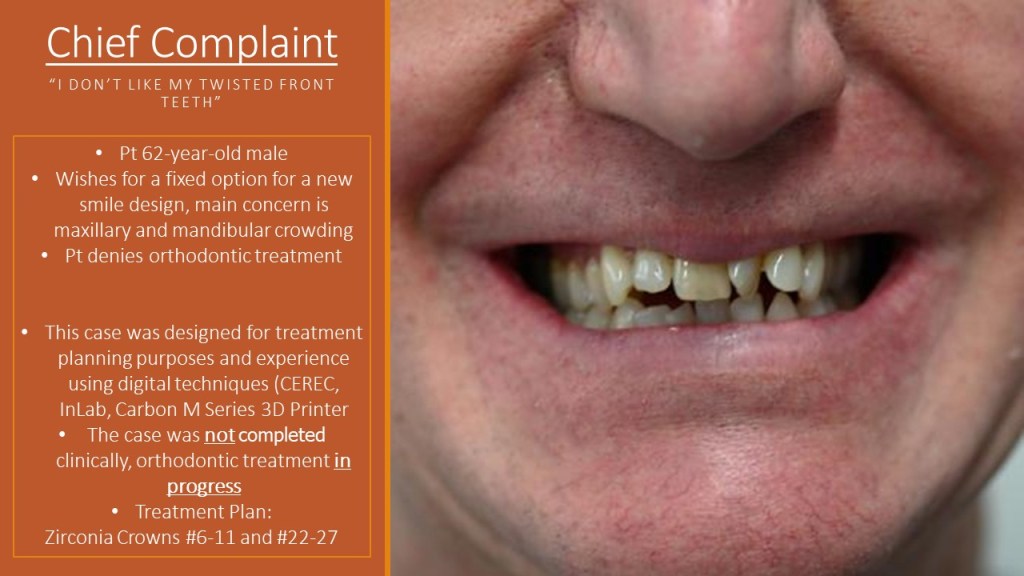
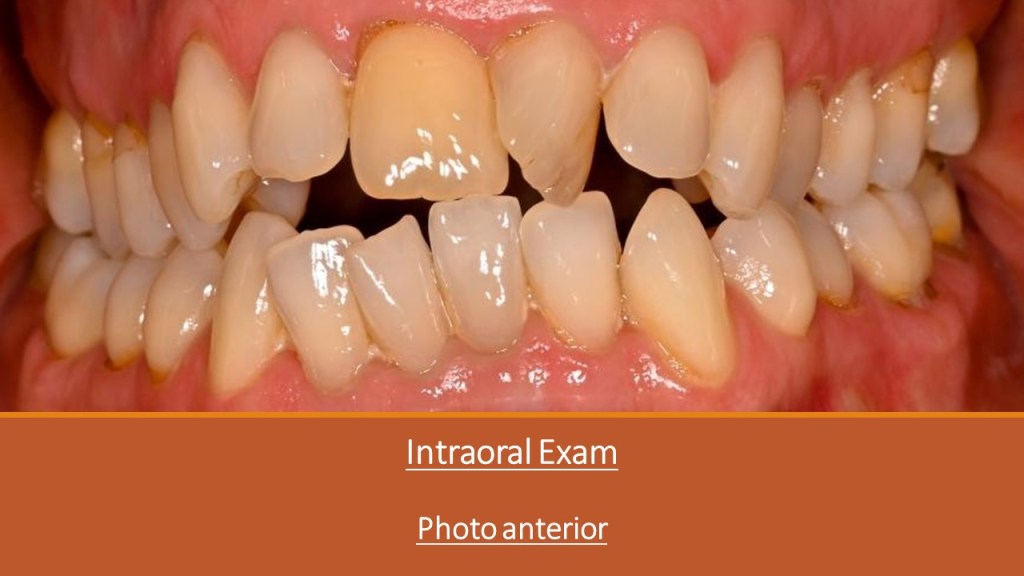
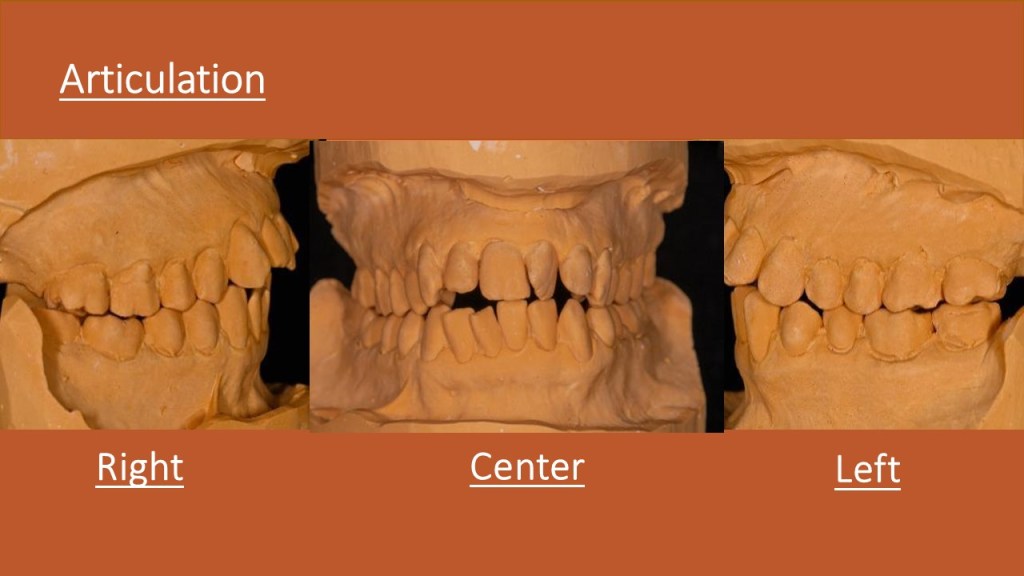
Patient presented with maxillary and mandibular crowding, open bite, rotation of #9, discolored endodontically treated #8, premature contact in CR #9/23Extra oral examination findings: adequate opening, no deviation upon opening, TMJ R/L mild popping, no muscle tenderness upon palpation, low to moderate smile, straight profile, right nasolabial angel, OSC negative, no lymphadenopathyArticulated Models in CR: Molar Classification – Class II (right), Class I (left; Canine Classification – Class II (right/left); Occlusal Plane Violations: 2/31/30/9/ DL Cusp#11/ MB Cusps #4/5/12/13; Guidance: R/L Group Function with interferences on both sides (orthodontic treatment strongly recommended)Ideal Preparations designed for E.max ZirPress Crowns for esthetic purposes, ideal reduction minimum: 1.5-2 mm occlusal reduction, axial reduction: 1-1.5 mm (0.3 mm minimum). Angulation of crown preparations were verified by merging original preliminary impression, digital wax up and crown prepared cast
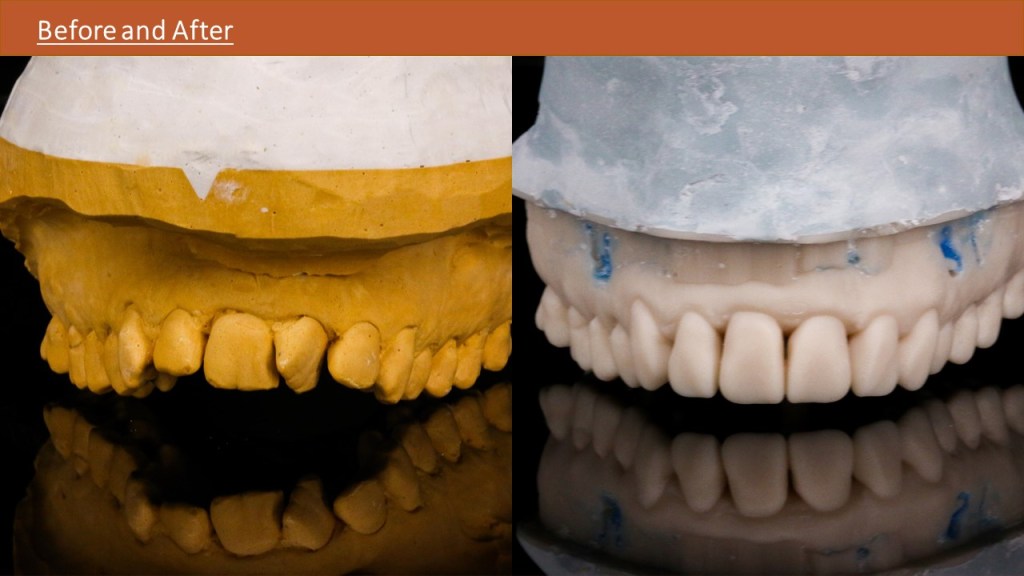
Diagnostic Digital Wax up designed using InLab Digital Software3D Printed Models using Carbon 3M Digital Printer; Digital wax up includes crowns #6-11 and #22-27 for best esthetic result. Additionally, traditional analog wax up on #18 for E.max crown illustrated here; Case planned for crowns on #18/19 due to failing existing restorations
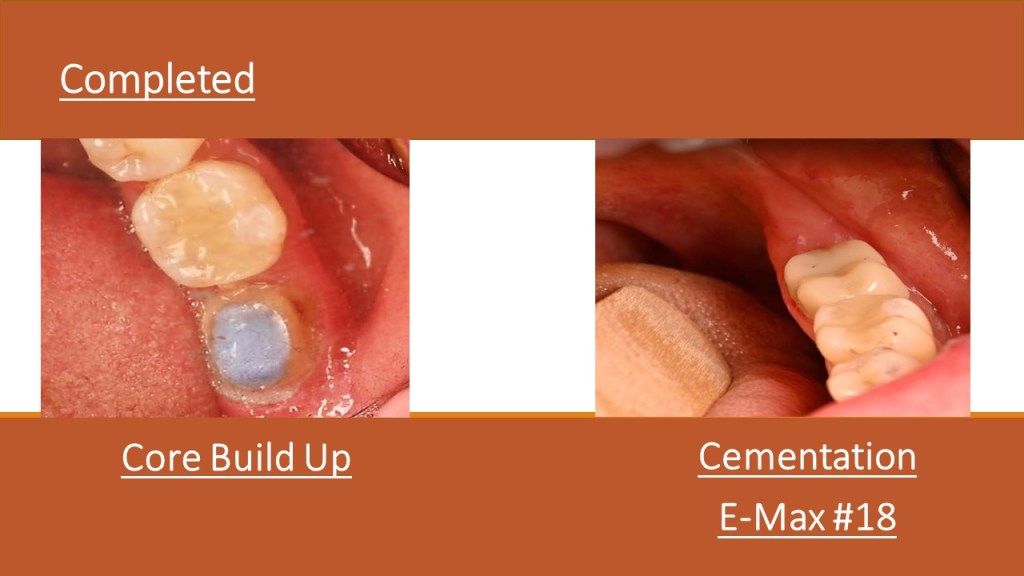
Merged original preliminary impression, digital wax up and crown prepared cast depicted the idealized crown preparations fall within the parameters of the digital InLab designed wax up Clinical Procedure completed thus far at Goldman School of Dental Medicine: Crown preparation on #18, showing core build up after excavating defective restoration and remaining caries, cementation same day of E.max #18 using CEREC technologyPatient has decided to complete limited orthodontic treatment for 1-2 years before esthetic treatment begins for better esthetic outcome and appropriate occlusion




 Marissa Gentle DMD 2022 E-Portfolio